
A Guide to Scrub Styles for Nurses, Doctors, and Medical Students
Choosing the right scrubs is about comfort, function, and professional presentation. Whether you work long shifts, float between units, or are learning clinical skills as a student, the right style reduces distractions and helps you move confidently through your day.
Start by checking seasonal updates and new colors so your uniform stays fresh and compliant. For the latest arrivals and styles, see New Arrivals.
How to choose the right scrub style for your role
Ask three practical questions: What are my mobility needs? What pockets and organization are essential? Does my facility require a particular color or logo? For a broad view of fabric types and top/bottom combinations, browse the Medical Scrubs selection to compare fits and materials.
Tips by role:
– Nurses and techs: prioritize pockets, durable stitching, and stretch for lifting and bending.
– Doctors and advanced practitioners: choose clean lines and layers that support quick transitions between clinical areas.
– Students: opt for affordable, easy-care pieces that look professional during rotations.
Scrub tops: V-neck, crew, zip, prints and tunics
Top style affects appearance and function. V-neck tops are classic and ventilating. Crew-neck or stand-collar tops offer a sleeker look and can be more professional in consult settings. Zip or half-zip tops provide modesty and quick on/off for procedures.
If you want a blend of comfort and a tailored front, consider options like the Women’s Lovely V Neck Scrub Top which pairs relaxed fit with practical pockets—useful for ward rounds and multi-tasking.
Scrub bottoms: pants, joggers, cargo and specialty fits
Bottom choices impact mobility and pocket capacity. Classic straight-leg pants provide a polished silhouette. Jogger-style pants are popular for long shifts because of their tapered ankle and elastic cuff that prevents snagging. Cargo and pocketed pants increase storage for pens, phone, and small tools.
If you need flexible sizing and multiple color options, the XS-2XL 6 Colors Stretch Edge Nurse Uniform Bottoms offer a wide size range and stretch fabrics designed for long days.
Specialty scrubs and surgical wear
For OR, ED, or specialty clinics you’ll want fabrics and closures designed for sterile or semi-sterile environments—stand-collar, zip-up, or snap-shoulder styles can provide additional coverage and ease when donning gowns. Consider scrub sets designed specifically for operating rooms to meet the practical needs of sterile workflow.
See options like the Unisex Stand-collar Zip-up Scrub Set for OR-ready features and a unisex fit that works across specialties.
Lab coats and layering for different settings
Lab coats add protection and visual authority during rounds and consultations. Choose a length and cut based on your daily tasks—shorter coats are convenient for procedures, while longer coats offer more coverage and pocket space. For students, a professional student-length coat is a smart investment.
Explore functional styles and lengths in the Lab Coats collection to match your clinical role and preferred pocket layout.
Footwear and accessories that complete the kit
Footwear affects safety and stamina. Look for slip-resistant soles, closed toes, and easy-to-clean materials. If you rotate between units, a neutral, supportive shoe reduces fatigue and helps you meet infection-control rules. Add a functional watch, badge reel, and a lightweight stethoscope case for daily convenience.
For dedicated shoe options and slip-resistant choices, check the Medical Footwear category.
Fit, fabric, cleaning and care
Fabric blends matter: polyester-spandex blends offer stretch and wrinkle resistance, while cotton-rich blends improve breathability. If you sweat or work in high-temperature areas, prioritize moisture-wicking and quick-dry finishes. Follow care labels—hot washes and high-heat drying can shrink or degrade finishes that maintain fit and color.
When buying, test movement: squat, reach, and bend in the fitting room. If ordering online, choose sellers with clear size charts and returns policies to avoid repeated purchases.
Packing and organization for shifts
Organize your shift kit to reduce stress. Use a durable bag with compartments for shoes, scrubs, and personal items, and include a small pouch for pens, hand sanitizer, and bandage supplies. A separate compartment for shoes prevents contamination of clean items.
Find purpose-built storage and shift bags in Bags & Organization to streamline your routine.
Quick checklist before you buy
- Confirm facility color and logo requirements.
- Identify essential pockets and tool storage needs.
- Choose breathable, easy-care fabric with adequate stretch.
- Pick footwear with slip-resistant soles and arch support.
- Buy one quality lab coat or consultation coat for rounds.
- Test movement: squat, reach, bend before finalizing fit.
FAQ
- Q: How many scrub sets should I own?
A: Aim for at least three full sets to rotate through laundry during a busy schedule; adjust upward if you have extra shifts or frequent spills. - Q: Are printed scrubs appropriate for clinical settings?
A: Many pediatric and outpatient clinics welcome tasteful prints; confirm with your employer and choose prints that remain professional and not distracting. - Q: How do I choose between jogger and straight-leg scrubs?
A: Choose joggers for active shifts where tapered ankles prevent snagging; choose straight-leg for a more formal look or when wearing ankle-covering footwear. - Q: What lab coat length should a medical student buy?
A: A mid-thigh or knee-length student coat balances mobility and professionalism; shorter coats are practical during procedures. - Q: How can I extend the life of my scrubs?
A: Wash on gentle cycles with mild detergent, avoid high-heat drying, and replace items once seams or fabric lose structure to maintain a professional appearance.
Conclusion
Choose scrubs that meet your unit’s requirements, prioritize fit and pockets for daily tasks, and select fabrics that stand up to repeated laundering. A small investment in proper footwear, a serviceable lab coat, and an organized shift bag will pay back in comfort and efficiency.
Ready to update your kit? Start with core scrubs and build accessories around your workflow: tops and bottoms for your role, a reliable lab coat, supportive footwear, and an organized bag for every shift.
Products Featured in This Article

Womens Lovely V Neck Scrub Top Short Sleeve Bloom Print Nurse Pockets Relaxed Fit Medical Tunic For Ward Rounds Clean Work Shirt
Buy Womens Lovely V Neck Scrub Top Short Sleeve Bloom Print Nurse Pockets Relaxed Fit Medical…

XS-2XL 6 Colors Stretch Edge Nurse Uniform Bottoms Medical Scrubs Pants Casual Doctor Dental Clinic Work Trousers Nursing Pants
XS-2XL 6-color stretch nurse scrubs pants, breathable 72% polyester 22% rayon 6% spandex, elastic waist, zip…
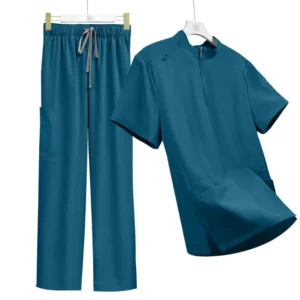
Unisex Stand-collar Zip-up Scrub Set, Operating Room Surgical Outfit, for Doctors, Nurses, Dentistry, and Pediatrics Workwear
Buy Unisex Stand-collar Zip-up Scrub Set, Operating Room Surgical Outfit, for Doctors, Nurses, Dentistry, and Pediatrics…