How to Find the Right Scrub Fit for Your Body Type
Choosing scrubs that fit your body well improves comfort, confidence, and performance on shift. The right cut reduces tugging, prevents bunching, and helps you move freely through long days.
This guide explains how to identify your body type, what to look for in tops and bottoms, and practical fitting tips so you can find scrubs that work for you and your workplace. If you’re ready to browse styles as you read, start with our Medical Scrubs selection for a wide range of cuts and fabrics.
Know Your Body Type and What It Means for Fit
Before trying on scrubs, identify your general proportions: balanced (rectangle), pear (hips wider than shoulders), apple (midsection fuller), hourglass (shoulders and hips balanced with a defined waist), or inverted triangle (broader shoulders). Each shape benefits from specific design features.
If you prefer tailored options or decorative details that flatter your proportions, consider pieces from our Personalized & Fashion collection to see variations in necklines, darts, and pocket placement that create a more customized silhouette.
Top Styles That Flatter Different Shapes
Tops are where proportion and comfort meet. V-necks lengthen the appearance of the torso, while boat or round necks offer broader coverage. Tunic-length tops can balance hips and thighs for pear shapes, and slightly tapered tops highlight an hourglass waist.
For a roomy, practical option that still looks neat, our Neat V Neck Scrub Top demonstrates a roomy fit with structured lines—good for those who need mobility without a clingy look.
Choosing Pants: Waistlines, Rise, and Leg Shape
Pants are critical for comfort. Key decisions are rise (low, mid, high), waist closure (drawstring, elastic, or fixed), and leg cut (straight, tapered, jogger, flare). For example, high-rise or elastic-waist pants stabilize the midsection for apple shapes, while straight or slightly tapered legs lengthen the silhouette for shorter people.
If you need a flexible, size-inclusive option, try our Stretch Edge Nurse Uniform Bottoms, which come in multiple sizes and offer a stretch edge for comfort and movement—helpful across a range of body types.
Fabric, Stretch, and Construction: What to Prioritize
Fabric choice directly affects fit. Blends with spandex or elastane provide recovery and ease; polyester blends resist wrinkling and maintain shape. Look for fabrics labeled breathable and stretchy for long shifts.
For someone who prefers a fashionable silhouette without sacrificing mobility, styles like the Split Hem Flare Pants combine elastic waist construction with a flared leg to balance hips and add movement.
Sleeves, Shoulders, and Necklines: Small Details, Big Impact
Shoulder seams should sit at the edge of your shoulder bone; seams that droop or pull indicate a size or cut mismatch. Sleeve length affects reach—shorter sleeves can reduce bunching when lifting, while longer sleeves may offer added protection or warmth.
Unisex and structured tops often use broader shoulders and straight cuts; if you need that look, consider our Unisex Stand-collar Zip-up Scrub Set as an example of a structured neckline and shoulder that suits broad-shouldered or boxy shapes.
Layering and Accessories That Affect Fit
Layering changes perceived fit—adding a lab coat or vest can hide or accentuate parts of the scrub. Make sure the scrub top is not so tight that layering causes restriction. Test movement with any intended outerwear.
If you routinely wear an overcoat or lab coat, check layering options in our Lab Coats collection to find lengths and cuts that sit well over your chosen scrub top without pulling at the shoulders or waist.
Trying On: A Practical Fitting Routine
When trying scrubs on, follow a consistent routine: move through typical tasks (bend, lift, reach forward), check pocket placement, and note where fabric bunches. Use mirrors and, if possible, try tops and bottoms together.
- Stand, sit, bend, and reach—watch for restriction at shoulders, waist, and hips.
- Check that seams align with your natural shoulder and hip points.
- Ensure pockets sit where you can reach them without tugging the fabric.
- Consider whether you’ll layer a coat or wear an underlayer when selecting size.
Small Checklist Before You Buy
- Confirm shoulder seam alignment and sleeve mobility.
- Test waistband comfort in sitting and standing positions.
- Verify fabric recovery—stretch the fabric and let it return to shape.
- Check pocket placement and depth against typical items you carry.
- Try the scrub top and pants together for proportion and length.
Care, Alterations, and Proportions
Proper laundering keeps scrubs performing. Follow care labels to prevent shrinkage that alters fit. For near-perfect fit without buying a new size, small tailoring adjustments—tapering side seams, shortening a hem, or fixing sleeve length—can make a big difference.
Footwear also changes how your scrubs hang—choosing supportive options can improve posture and the overall look. Browse our Medical Footwear selections to pair shoes that support both comfort and silhouette.
FAQ
- How do I choose between a fitted or roomy top?
Choose fitted if you prefer a tailored look and minimal fabric movement; choose roomy if you need extra reach and layering space. - Can I size up in pants and have them altered?
Yes—sizing up can preserve comfort in the waist and hips, then a tailor can adjust leg width for a cleaner look. - What features help balance a pear-shaped body?
Look for tops with structure at the shoulders, V-necks to lengthen the torso, and straight or slightly flared pant legs to balance hips. - Are jogger-style scrub pants flattering for most body types?
Joggers work well if the ankle cuff hits a flattering point on the leg; they suit many body types but may shorten the look on petite frames. - How much stretch is enough in a scrub fabric?
Aim for fabrics with at least moderate recovery—enough to move freely without sagging. Blends with a small percentage of elastane are ideal. - Where should I place pockets for best access?
Pockets should fall at or slightly below hip level and be deep enough for essentials without causing bulk when items are carried.
Conclusion
Finding the right scrub fit is practical: know your body type, prioritize stretch and seam placement, test movement, and consider small tailoring if needed. Use the product and category examples above to compare cuts and fabrics, and follow the checklist when trying items on—good fit saves time and keeps you comfortable through every shift.
Products Featured in This Article
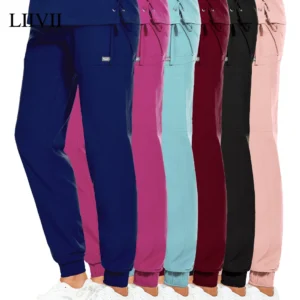
XS-2XL 6 Colors Stretch Edge Nurse Uniform Bottoms Medical Scrubs Pants Casual Doctor Dental Clinic Work Trousers Nursing Pants
XS-2XL 6-color stretch nurse scrubs pants, breathable 72% polyester 22% rayon 6% spandex, elastic waist, zip…
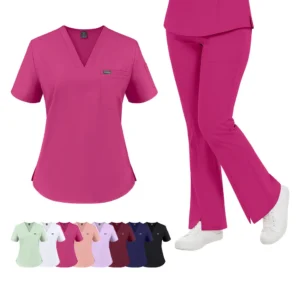
Medical Scrub Set Nurse Uniform Elastic High Waist Split Hem Flare Pants Breathable Suits for Hospital Dental Vet Beauty Salon
Buy Medical Scrub Set Nurse Uniform Elastic High Waist Split Hem Flare Pants Breathable Suits for…
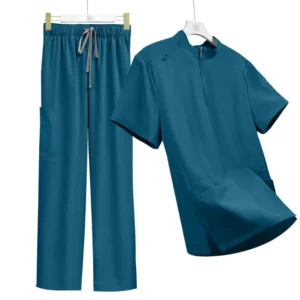
Unisex Stand-collar Zip-up Scrub Set, Operating Room Surgical Outfit, for Doctors, Nurses, Dentistry, and Pediatrics Workwear
Buy Unisex Stand-collar Zip-up Scrub Set, Operating Room Surgical Outfit, for Doctors, Nurses, Dentistry, and Pediatrics…

Womens Neat V Neck Scrub Top Short Sleeve Garden Print Utility Pockets Roomy Fit Medical Tunic For Medical Office Clean Duty Top
Buy Womens Neat V Neck Scrub Top Short Sleeve Garden Print Utility Pockets Roomy Fit Medical…